


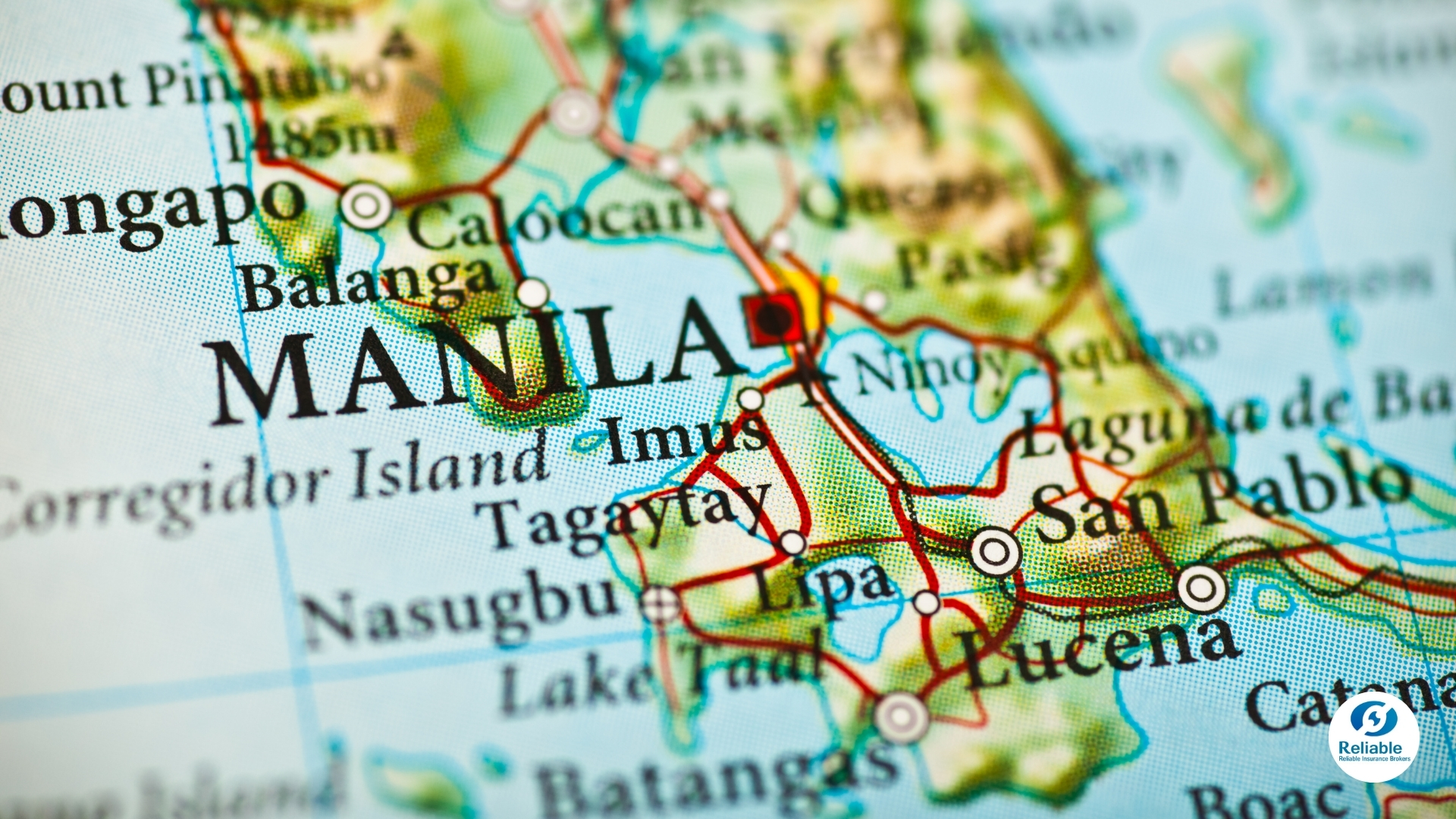
The Philippines experiences many earthquakes every year, although they are not as strong on a regular basis as those in Japan. This is because the country lies on what’s called the Pacific Ring of Fire, an area encircling the Pacific Ocean where many earthquakes occur due to active fault lines.
Let’s take a closer look at these fault systems to understand how and why they make the Philippines one of the most earthquake-prone countries in the world.
Understanding Faults: The Source of Earthquakes
Faults are fractures, or zones of fractures, between two blocks of rock that can range from a few millimeters to thousands of kilometers. These fractures allow the blocks of rock to move relative to each other.
Over long centuries, often referred to as geological time, the rocks move and cause little to no disturbance. An earthquake occurs when there is a sudden slip between the blocks of rock, as the massive release of energy transfers to the land around the faults in the form of familiar tremors.
Because faults are the source of earthquakes, agencies like the Philippine Institute of Volcanology and Seismology (PHIVOLCS) identify, catalog, and monitor them. As a country on the Pacific Ring of Fire, where many of the world’s major fault lines are located, the Philippines is home to several of them.
The Philippine Fault Zone: The Country’s Largest Fault System
Location: Across the entire archipelago
Seismic Activity: Active, constant, strong
The Philippine Fault Zone may be considered the main fault system in the country, as it is a network of several fractures, including well-known ones like the Marikina Valley Fault and those crossing Cebu province.
The system begins at the Davao Gulf in the south and extends all the way to Ilocos in the north. This vast fault system places the country’s major cities, Davao, Cebu, Manila, and Baguio, within the range of major earthquakes, along with most of the country’s industrial, commercial, and agricultural infrastructure.
The Marikina Valley Fault: The Threat Beneath Metro Manila
Location: National Capital Region
Seismic Activity: Active, constant, strong
Perhaps the most well-known fault system in the country, the Marikina Valley Fault has the notorious distinction of running directly beneath Metro Manila, most prominently at the Marikina Valley that gives the fault its name, and in Pasig. It is actually one of two faults underneath the capital metropolis, but the Marikina Valley Fault is the more well-known of the two.
The Valley Fault, as it is sometimes known, is the one expected to cause the so-called “Big One,” an earthquake of massive magnitude that would hit at the heart of Metro Manila itself. It is also believed to be contributing to recent activity at Taal Volcano.
The Marikina Valley Fault also passes through the Laguna Volcanic Field.
The Bogo Bay Fault: Cebu’s Newly Discovered Seismic Source
Location: Underwater, off Bogo City, Cebu
Seismic Activity: Recently active, strong
The Bogo Bay Fault is believed to have caused the massive earthquakes that jolted the Province of Cebu last September and October. It was actually the September 30 earthquake that allowed PHIVOLCS to discover the fault. It is different from the Bogo Fault, another major source of tremors for the region.
The 1.5-kilometer fault runs all the way inland. It remained largely undetected because, according to PHIVOLCS scientists, the fault had not caused a major earthquake for over 400 years.
Staying Safe and Protected in an Earthquake-Prone Nation
While volcanology, the science of earthquakes and volcanic eruptions, has advanced significantly over the past century, predicting them remains far more difficult than tracking a typhoon.
Insurance products are designed to help you manage these uncertainties by providing a safety net for unexpected personal injuries and property damage. Personal health insurance gives you ready and easy access to emergency and medical services wherever your policy is accepted. Property insurance plans help ensure that you can receive compensation for damage to your assets. Business insurance coverage can also help you recover from disruptions and financial losses caused by disasters.
At Reliable Insurance Brokers, we offer a wide selection of plans to give you the protection and peace of mind you deserve. Our coverage options can expand your protection for various contingencies, even those considered Acts of God. Just give us a call, and our agents are ready to assist with your concerns.
Contact Information for Inquiries and Support
If you have any questions or need assistance with your insurance, feel free to reach out to us:
- Call: +63 2 8631 9285 to 86
- Mobile: +63 917 138 5120
- Email: info@reliable-insurance.ph
- Messenger: m.me/reliable.insurancebrokersph
Sources:
- Philippine Institute of Vulcanology and Seismology (No Date), Earthquake Hazards.
- US Geological Survey (No Date), What is a fault and what are the different types?
- Lumina (2022, July 27), Is Your Area Near Active Fault Lines? Find Out about the Fault Lines in the Philippines List.
- Rappler (2025, October 2), Bogo Bay Fault: Things to know about what caused the Cebu earthquake.