


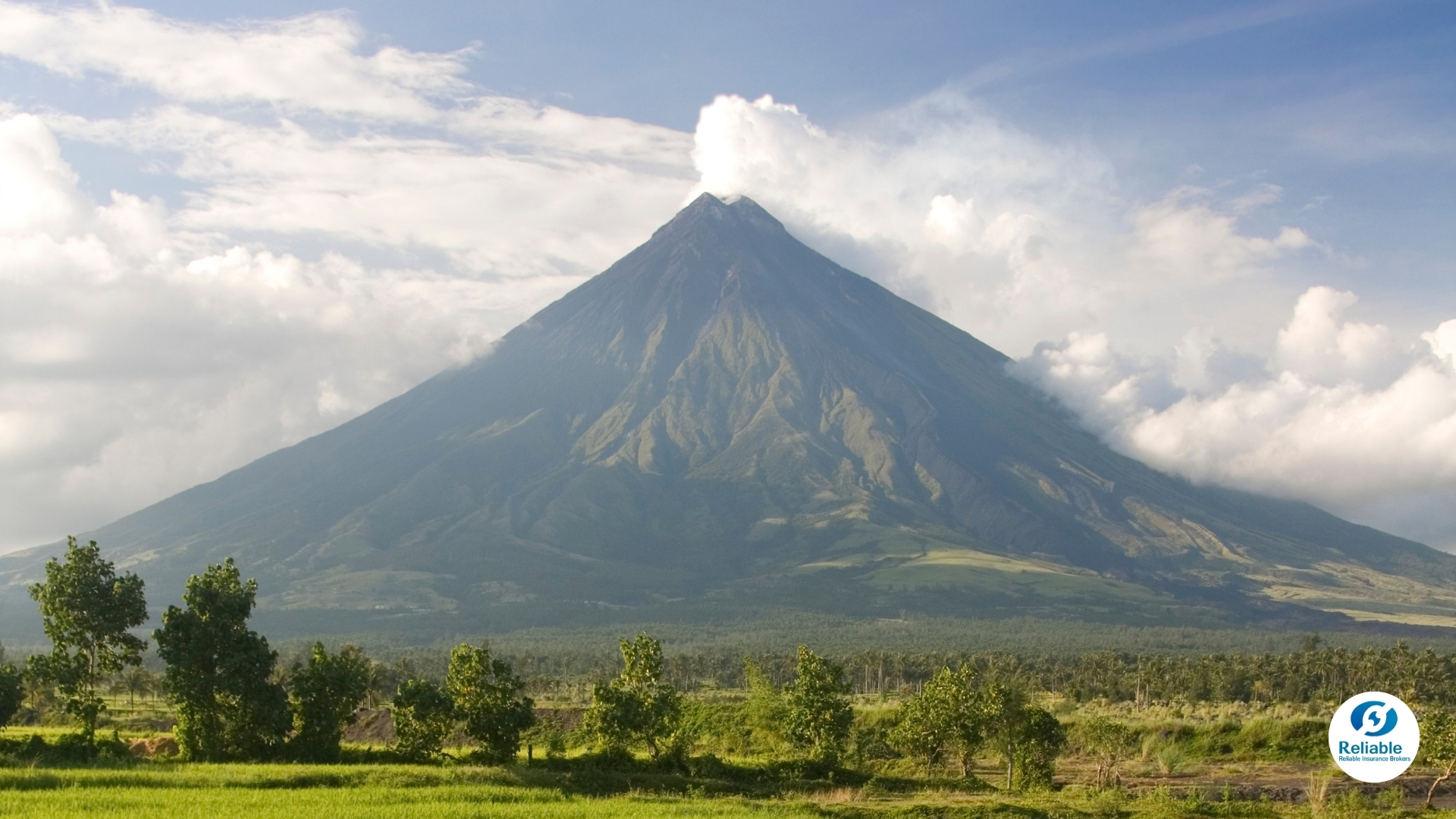
Volcanoes are a fact of life for any country on the Pacific Ring of Fire, an area of intense geologic activity surrounding the Pacific Ocean. The Philippines is one of these countries, and with volcanoes come volcanic hazards to health and property.
The country recently remembered Taal Volcano’s sudden eruption in 2020, and Mayon Volcano has been displaying intense activity of late. We’ll look at how these events affect your well-being and property, and how health and property plans help mitigate volcanic risks.
Dangerous volcanic activities explained
Volcanoes pose several major challenges to health and property. Below are some of the most common volcanic hazards.
Earthquakes:
- Before and during an eruption, the region near a volcano can suffer from multiple tremors of varying intensity. These can grow stronger as a volcano approaches an eruption.
- The impact these have on property varies with their condition. Any property that is old, poorly maintained, or already has structural weaknesses can suffer damage from these quakes. You can check our article on earthquakes to learn more.
- As a volcanic health hazard, these quakes can cause injuries from falling objects, accidental falls, or stress-related events for those with heart conditions.
Clasts:
- “Clast” is a general term for volcanic products such as ashfall and larger particles thrown into the air during an eruption. Ash is anything 2mm or smaller in size. Anything bigger is called tephra. Both can pose significant threats to property and health.
- Tephra is more of a danger to property than people, as the assumption is you’ve evacuated from a volcano’s region where big clasts can potentially injure you. Even smaller tephra can damage roofs if enough material accumulates. They can also strip leaves off vegetation or bury them, leading to crop loss.
- Ashfall is a well-known danger among Filipinos owing to experiences from as far back as the Pinatubo eruptions in the 1990s. Fine aerosols of volcanic particles can gather on top of roofs and collapse them, especially if rain comes and turns the ashfall into a kind of cement.
- Ashfall consists of microscopic dust particles with jagged edges. They can cause damage to the lungs and respiratory passages. They make breathing difficult and can lead to more serious health issues, especially among the elderly, the young, and those with health conditions.
Flows:
- Volcanoes are also best known for their release of lava. These flowing materials of intense heat and kinetic energy can pose significant volcanic hazards to lives and property.
- It goes without saying that such material can seriously damage buildings and land you own if they are in areas near an active volcano. If structures aren’t swept away by lava flows, they can be rendered useless once the material cools down. The same can be said of arable land.
- Lava flows pose a danger to people who remain near affected areas. Greater danger for people comes in the form of volcanic ejecta, such as lahar. Unlike the relatively slower-moving lava, lahar moves quickly and can overtake people with little warning. Look for a video of a news crew narrowly escaping lahar during the Pinatubo eruption as an example of the dangers posed by lahar.
Protecting your health and property from volcanic risks
More often than not, volcanoes come with warning signs familiar to modern geology. The Philippine Institute for Vulcanology and Seismology, or PHIVOLCS, provides regular monitoring and alerts, and you should follow their official channels to stay updated on volcanic hazards.
You can also protect your loved ones and property from volcanic risks by getting the appropriate health and property coverage. While PHIVOLCS does an admirable job keeping tabs on our volcanoes, they can still surprise us and cause considerable damage if an eruption does occur.
Here is how insurance plans help you manage volcanic risks:
- Immediate access to medical relief. In an emergency, you will have access to any healthcare facility that recognizes your plan. You will be confident that you and your loved ones will have the best care your coverage can provide.
- Coverage of costs. Bills for treatment, care, and medicines due to volcanic health risks can be costly. Healthcare plans help defray these costs or cover them totally, depending on your policy.
- Preventive healthcare. Your plan allows you to get checkups when you need them to assess the impact of ashfall events or even just the general stress from the alerts and get the medical relief you need.
- Relief from property damage and loss. The primary role of property insurance is to help you deal with damage to what you own. Be sure to check if you might need Acts of God coverage for your plan.
- Risk assessment. Several types of property insurance come with assessments of risks and the condition of your property, including advice and financial assistance in dealing with these risks and fixing a property’s dilapidated parts.
- Business continuity. For properties involved in business operations, some insurance plans provide the means to handle interruptions or even loss of your livelihood.
Health and property insurance cover risks you cannot foresee and help you prepare for events that PHIVOLCS warns about. If you want to know more about responding effectively to volcanic hazards, Reliable Insurance Brokers can help guide you on the best coverage for your concerns.
Contact Information for Inquiries and Support
If you have any questions or need assistance with your insurance, feel free to reach out to us:
- Call: +63 2 8631 9285 to 86
- Mobile: +63 917 138 5120
- Email: info@reliable-insurance.ph
- Messenger: m.me/reliable.insurancebrokersph
Sources
- Centers for Disease Control (2024, April 22), Health Effects of Volcanic Air Pollution.
- British Geological Survey (No Date), Volcanic hazards.
- USGS (No Date), Understanding volcanic hazards can save lives.